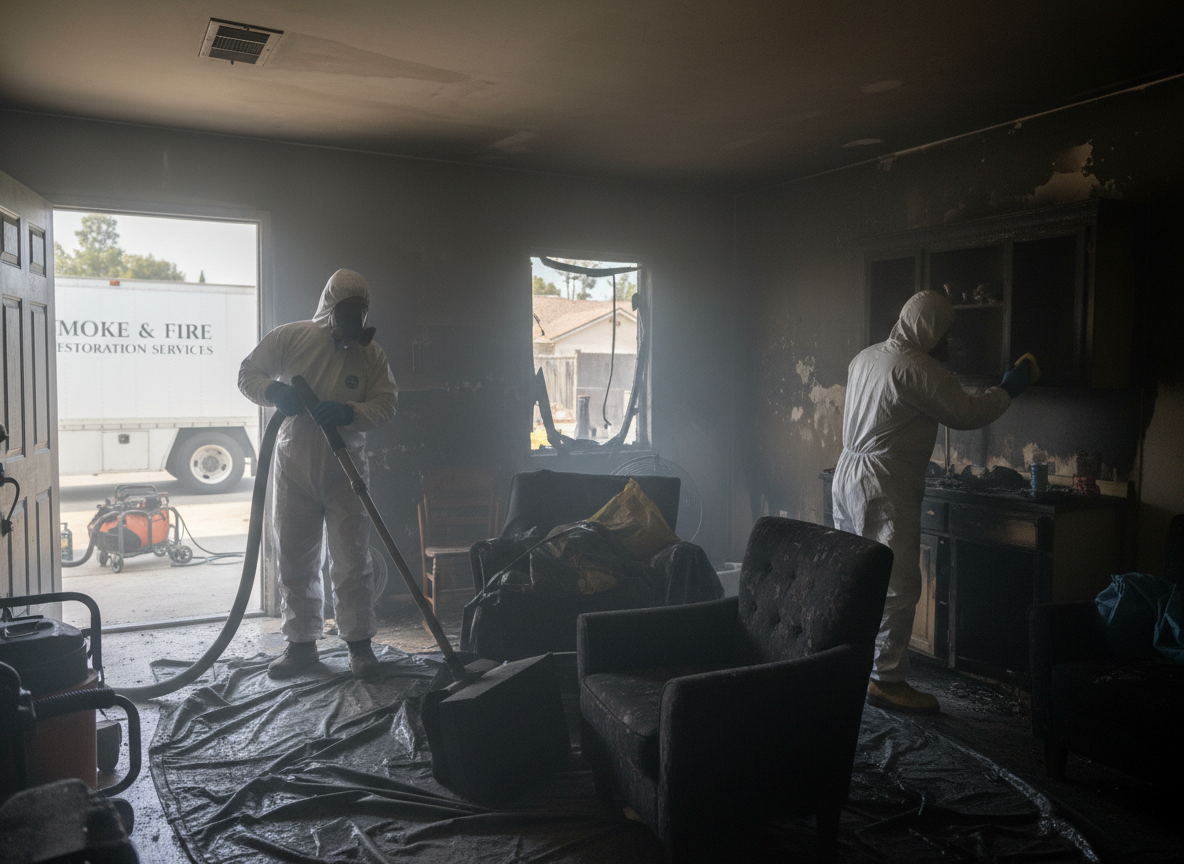
Smoke remediation in Reseda requires careful attention to how Mediterranean climate hot dry summers allow fine soot particles to travel farther and embed deeper into building materials. Homes near Reseda Park and along Victory Boulevard often feature older plaster and lath construction common throughout Los Angeles County, where smoke travels through wall cavities and HVAC systems more readily than in newer builds. Technicians must test for pH levels on surfaces because alkaline soot from synthetic materials can etch finishes if not neutralized before cleaning. Without proper containment, odors linger in porous items like insulation and carpet padding, especially when windows stay closed during summer heat.
Westfield Topanga and nearby Van Nuys corridors see frequent traffic that can introduce additional contaminants during restoration, making negative air pressure setups essential to prevent cross-contamination between rooms. In Lake Balboa properties with slab foundations, smoke often settles into subfloor voids and requires targeted extraction rather than surface wiping alone. Crews document every step with photos because insurance adjusters in Los Angeles County frequently question hidden damage claims. Homeowners sometimes attempt DIY ozone treatments that fail to reach behind cabinets or in attic spaces common in 1950s-1970s Reseda housing stock.
Seasonal Considerations
Hot dry summers in Reseda accelerate smoke residue oxidation, turning it more acidic and harder to remove after just a few days of exposure. Restoration teams schedule work during cooler morning hours to avoid rapid drying that locks soot into fabrics and wood trim.
Common Materials Affected
Drywall, acoustic ceilings, and forced-air ducts in local homes trap smoke odors that reactivate during temperature swings typical of Los Angeles County weather patterns.
Technician insight
In Reseda, the thing that catches most people out with smoke remediation is how dry summer air lets soot travel through the gaps in 1960s plaster walls near Reseda Park and settle in attic insulation that homeowners never think to check.
Smoke in Lake Balboa Condo After Kitchen Fire
A kitchen fire sent smoke through shared vents into multiple units. Inspection revealed alkaline soot lodged in acoustic ceiling tiles and behind baseboards. Crews contained the space, neutralized surfaces, and treated the HVAC before odors could migrate to neighboring homes. The property passed clearance testing within four days.
How it works
- 1
Initial Assessment
Inspect all affected rooms, test surfaces for soot type and pH, and map odor pathways through HVAC and wall cavities.
- 2
Containment Setup
Install plastic barriers and negative air machines to isolate work zones and prevent soot spread to unaffected areas.
- 3
Surface Cleaning
Apply pH-neutralizing agents and HEPA vacuuming to walls, ceilings, and contents before odor neutralization.
- 4
Odor Removal
Use thermal fogging or hydroxyl generators to penetrate porous materials and eliminate embedded smoke smells.
- 5
Final Clearance
Conduct air quality testing and visual inspection to confirm no residue remains before returning the property.
Pricing
Costs depend on square footage affected, depth of soot penetration, and whether HVAC cleaning is required.