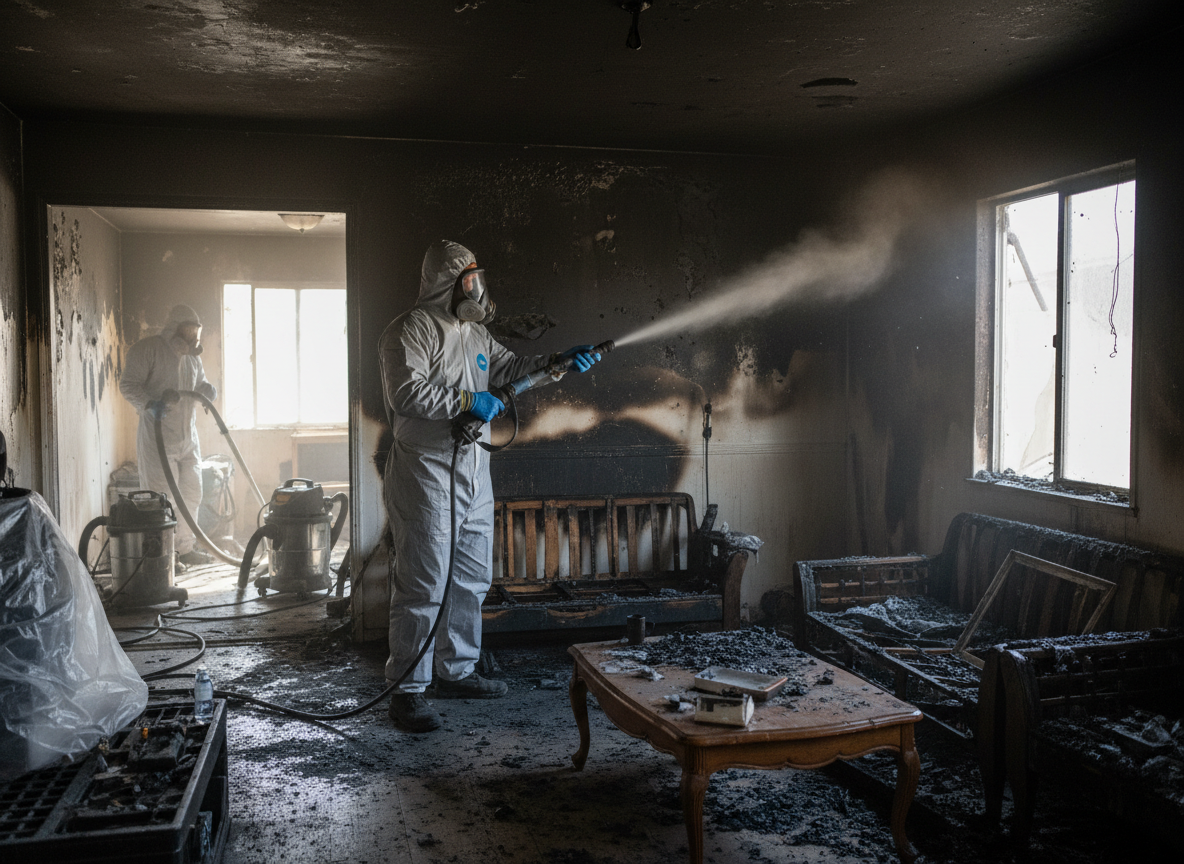
In Reseda’s older wood-frame and stucco homes built before the 1970s, smoke from nearby fires travels through unsealed attics and shared walls, leaving acidic residues that corrode copper wiring and HVAC coils. Hot dry summers accelerate this penetration because low humidity lets fine particles travel farther before settling. Technicians must test surfaces with pH strips and remove drywall up to the point where readings return to neutral, often extending past obvious soot lines into cavities around Reseda Park residences.
Lake Balboa properties near the reservoir face added moisture issues when smoke mixes with evening marine layer, creating stubborn yellow staining on textured ceilings. Restoration crews isolate HVAC systems first to prevent recirculation, then use negative-air machines with HEPA filtration rated for Los Angeles County air-quality rules. Odor neutralization requires pairing thermal fogging with hydroxyl generators because ozone alone can damage the rubber gaskets common in older Van Nuys-adjacent homes.
Westfield Topanga-area townhomes often have shared ventilation shafts that carry smoke between units, requiring coordinated access agreements before work begins. Crews document every layer removed with photos and moisture logs to satisfy insurance adjusters who know how quickly summer heat sets residues. Final clearance testing includes both visual inspection and air sampling to confirm no measurable particulates remain before reoccupancy.
Technician insight
In Reseda, the thing that catches most people out with smoke damage restoration is how the hot dry summers let smoke travel through unsealed stucco cracks and into the attic spaces of 1950s-60s homes around Reseda Park, so the visible soot on walls is rarely the full extent of the job.
Smoke Migration Through Shared Attic
A Lake Balboa home showed light ceiling staining after a neighbor’s fire. Inspection revealed smoke had traveled through an unsealed attic chase into three bedrooms. Crews sealed the chase, removed stained drywall sections, ran negative air for four days, and completed neutralization before clearance testing passed.
How it works
- 1
Initial Assessment And Containment
Technicians arrive within hours, map smoke migration paths through the home’s ductwork and attic spaces, then seal affected zones with plastic sheeting and negative pressure to stop further spread into unaffected rooms.
- 2
Surface Cleaning And Material Removal
Porous items such as carpet, insulation, and drywall sections showing pH above 8 are removed; non-porous surfaces receive specialized degreasers formulated for soot on Reseda’s common stucco and wood trim.
- 3
Odor Neutralization And Air Scrubbing
Thermal fogging followed by hydroxyl treatment neutralizes embedded odors while HEPA air scrubbers run continuously, with filters changed daily until readings meet clearance standards.
- 4
Rebuild And Final Clearance
New drywall and insulation are installed, HVAC systems are cleaned and balanced, then independent air sampling confirms the home meets Los Angeles County habitability guidelines before keys are returned.
Pricing
Cost depends on square footage affected, number of HVAC zones, and whether shared walls require neighbor coordination.