Reseda sits in the San Fernando Valley under a Mediterranean climate with hot dry summers that pull smoke deep into older stucco and wood-frame homes built after World War II. Smoke travels through the common attic spaces and HVAC returns found in these houses, leaving acidic residue on drywall, insulation, and electrical wiring. Restoration crews must remove affected materials rather than simply clean surfaces because the residue continues to corrode metal and discolor paint weeks later.
Lake Balboa and adjacent Van Nuys properties often share the same 1950s-1970s construction, meaning fire damage frequently reaches shared walls and roof sheathing before firefighters arrive. Crews working near Westfield Topanga or Reseda Park routinely test for hidden char behind cabinets and in crawl spaces where embers can smolder for hours. Los Angeles County building codes require permits for any structural replacement, so documentation of every removed section becomes part of the job from day one.
Dry summer conditions also mean outdoor smoke can enter through open windows and vents during an incident, requiring whole-house air scrubbing even when the fire stayed contained to one room. Technicians test porous materials like carpet padding and acoustic ceiling texture on site because these items hold odor longer than hard surfaces. Homeowners who attempt DIY cleaning with household products often set the residue permanently, requiring additional removal later.
Work in Reseda frequently involves coordinating with local fire departments for access and with insurance adjusters who know the typical repair paths through these neighborhoods. Proper containment keeps soot from migrating into unaffected rooms during demolition, a step that becomes critical in multi-unit buildings common along Victory Boulevard.
Technician insight
In Reseda, the thing that catches most people out with fire and smoke damage restoration is how quickly smoke travels through the shared attic spaces in 1950s-1970s homes during our hot dry summers. Homeowners often think wiping visible walls is enough, but the residue stays in the insulation and HVAC returns and keeps smelling months later if those aren't addressed.
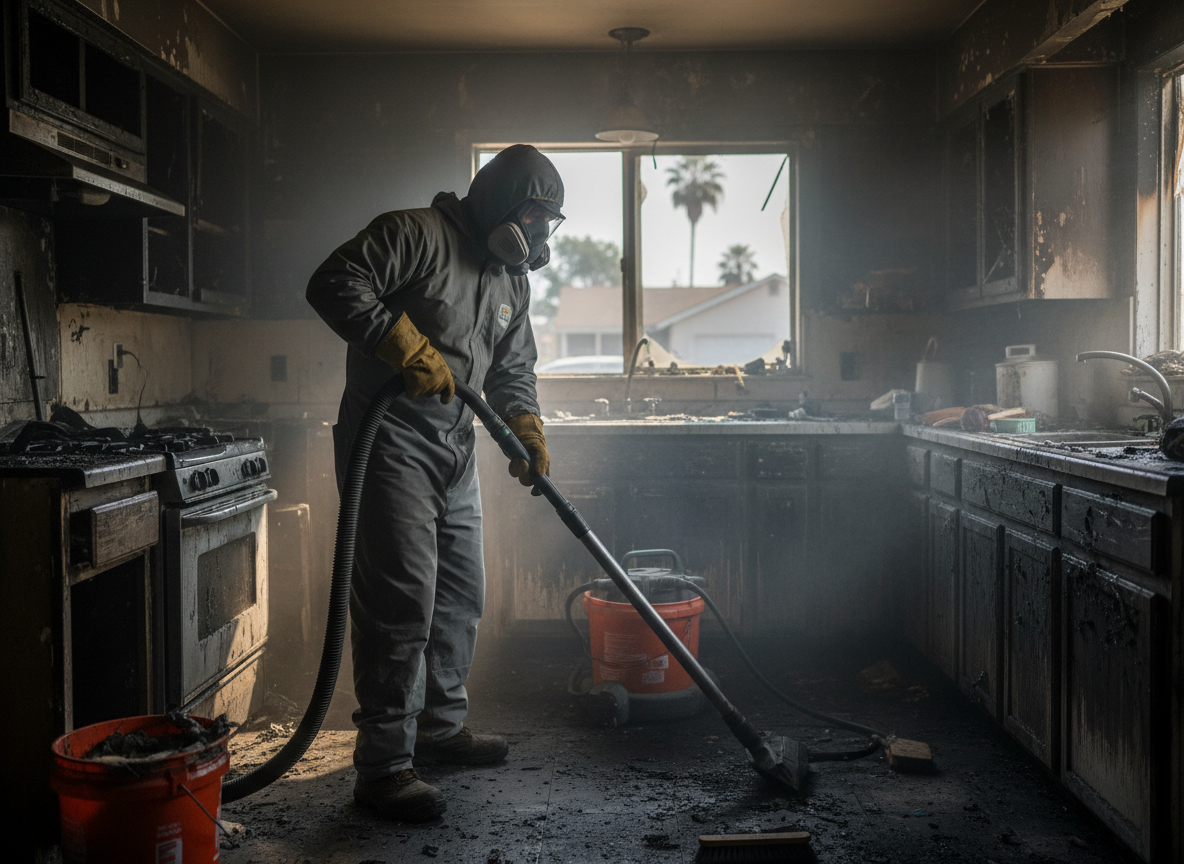
Kitchen fire in 1960s Reseda home
A cooking fire spread into the attic through a range hood vent. Inspection showed heavy soot on rafters and in the HVAC trunk line serving the whole house. Crews removed affected insulation and duct sections, cleaned the remaining framing, then rebuilt to current code before returning the family.
How it works
- 1
Emergency Board-Up
Secure the structure with temporary barriers to prevent weather intrusion and unauthorized entry.
- 2
Smoke and Soot Assessment
Document affected materials and test surfaces for residue depth before any cleaning begins.
- 3
Contents Removal and Cleaning
Pack out salvageable items and treat them in a controlled environment to remove embedded odor.
- 4
Structural Restoration
Remove damaged drywall, insulation, and framing then rebuild to current Los Angeles County standards.
- 5
Final Odor Removal and Clearance
Run air filtration and perform clearance testing before returning the home to the owner.
Pricing
Upfront quotes provided after on-site inspection; final cost depends on square footage affected and materials requiring removal.