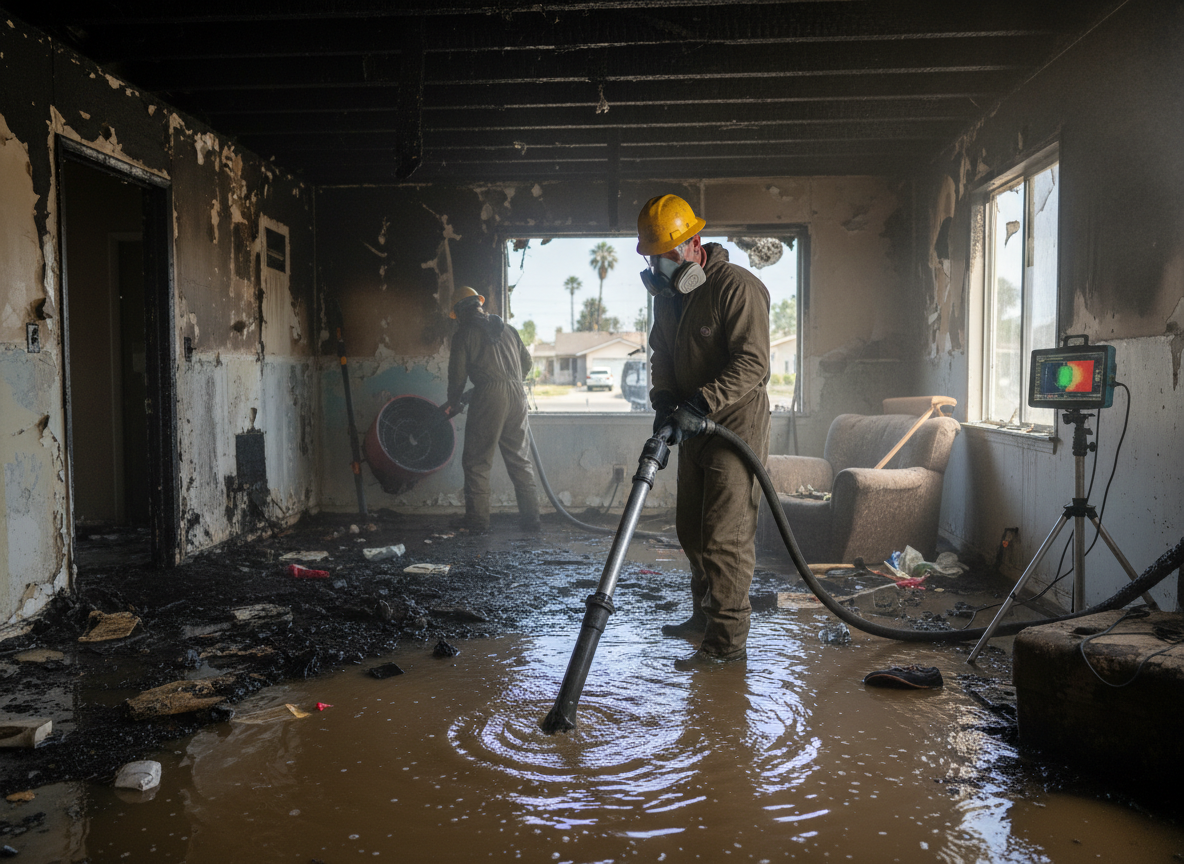
Reseda sits in the San Fernando Valley under a Mediterranean climate where hot dry summers drive higher fire risk from embers and electrical faults in older wood-frame houses built between the 1940s and 1970s. When fire crews suppress flames with water or foam, hidden moisture quickly migrates into lath-and-plaster walls, subfloors, and attic insulation common in these post-war homes. Left unchecked, that moisture leads to mold within days once cooler marine air moves in from the coast.
Properties near Reseda Park and along Victory Boulevard often share narrow lots with shared fences and mature trees, so smoke and water can travel into neighboring structures before owners notice. Restoration crews must isolate affected zones quickly to prevent cross-contamination while working around original knob-and-tube wiring and single-pane windows that complicate drying. Los Angeles County building codes require permits for any structural drying that involves wall or ceiling removal, and inspectors check for proper documentation of moisture mapping before repairs can proceed.
Flooding after fires frequently stems from broken supply lines or later winter rains entering compromised roofs. Crews use air movers and dehumidifiers sized for the valley’s low humidity days, but must adjust for the higher moisture loads trapped behind stucco exteriors typical in Lake Balboa and Reseda. Homeowners who attempt DIY drying with box fans often push soot deeper into HVAC ducts that run through crawl spaces, raising remediation costs later.
Technician insight
In Reseda the thing that catches most people out with fire and flood restoration is how quickly summer fire-suppression water gets trapped behind the original plaster walls of 1950s tract homes near Reseda Park; once the first rain hits, it migrates into the stucco and you end up chasing moisture two stories down into the slab.
Fire-Damaged Bungalow Off Sherman Way
A kitchen fire in a 1962 Reseda bungalow sent smoke through the attic and water from hoses pooled under the living-room subfloor. Crews found elevated moisture readings extending into the adjacent dining area and removed saturated insulation before mold set in. After targeted drying and odor treatment the home passed county inspection and was ready for drywall replacement within ten days.
How it works
- 1
Emergency Board-Up and Site Security
Technicians arrive within hours to secure openings, tarp roofs, and prevent further water entry from summer storms or vandalism.
- 2
Moisture Mapping and Soot Removal
Infrared cameras locate hidden water behind plaster and under flooring while HEPA vacuums remove corrosive soot from surfaces.
- 3
Drying and Dehumidification
Industrial equipment runs continuously until readings meet industry standards, with daily logs kept for Los Angeles County permit requirements.
- 4
Demolition and Reconstruction
Damaged drywall, insulation, and flooring are removed and replaced using materials matched to the original 1950s-1970s construction details.
Pricing
Upfront quotes provided after on-site inspection; costs vary with extent of hidden water and smoke migration.