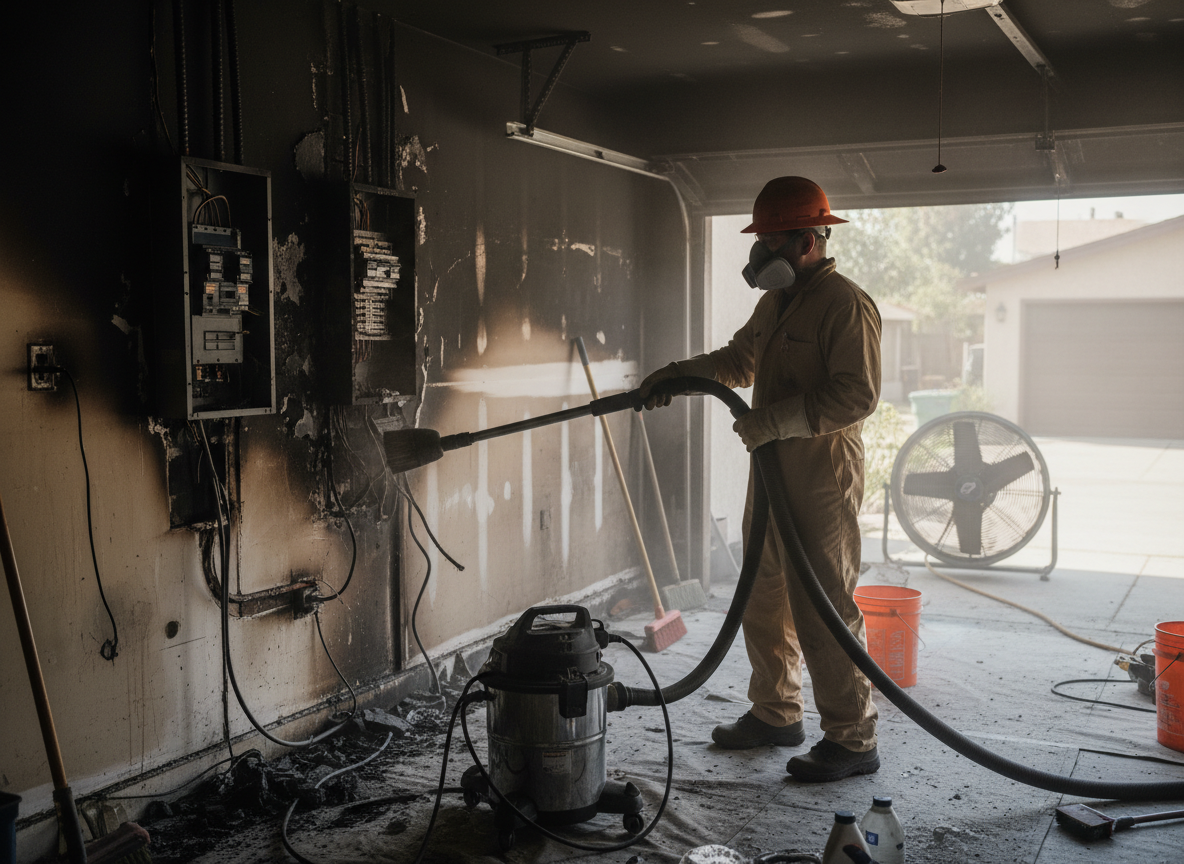
Electrical fires in Reseda often start from overloaded circuits in mid-century homes around Lake Balboa and near Van Nuys Boulevard, where aluminum wiring and knob-and-tube systems still exist in many properties. The hot, dry summers increase air conditioner use, pushing older panels past their limits and leaving behind acidic soot that corrodes copper and insulation if not neutralized quickly. Cleanup requires HEPA vacuuming combined with chemical sponges on surfaces, followed by ozone treatment to address embedded odors without spreading particulates into HVAC systems that serve nearby Woodland Hills and Westfield Topanga.
Technicians must trace every affected circuit because hidden arcing can remain in walls long after the visible flames are out, especially in single-story ranch homes built before 1970 that dominate Reseda streets. Moisture from suppression efforts mixes with soot to create conductive residues that damage outlets and switches weeks later if missed. Work follows Los Angeles County electrical codes requiring GFCI protection upgrades in kitchens and bathrooms during restoration to prevent repeat incidents.
After initial containment, crews remove charred insulation and test remaining wiring with thermal imaging before any reconstruction, a step that protects against insurance disputes common when fires affect properties bordering Reseda Park. Dry Mediterranean winds can carry fine particles into adjacent units, so negative air machines run continuously during the process to keep neighboring homes clear.
Technician insight
In Reseda, the thing that catches most people out with electrical fire cleanup is how quickly the dry summer air lets acidic soot travel through shared wall cavities in 1950s-60s homes near Reseda Park, turning a small kitchen panel failure into corrosion across multiple rooms if you don't seal and negative-pressure the space right away.
Overloaded AC Panel in Lake Balboa Home
A homeowner in a 1962 ranch near Lake Balboa reported burning smells after running the AC during a heat wave. We found arcing inside the main panel that had spread soot through the attic ducts into two bedrooms. After tracing every circuit, removing affected insulation, and neutralizing surfaces, the home passed air quality tests and was cleared for occupancy within four days.
How it works
- 1
Site Assessment
Inspect all circuits, outlets, and panels for hidden arcing damage while documenting soot migration through HVAC ducts.
- 2
Containment and Removal
Set up negative air and remove charred materials plus acidic soot from walls, ceilings, and fixtures using approved methods.
- 3
Neutralization and Cleaning
Apply pH-neutralizing agents to surfaces, followed by HEPA filtration and ozone treatment for odor control.
- 4
Verification and Handover
Retest wiring, confirm clearance with air quality checks, and coordinate with electricians for any required code updates.
Pricing
Cost depends on square footage affected, extent of wiring replacement needed, and whether HVAC systems require full cleaning; upfront quotes provided after inspection.