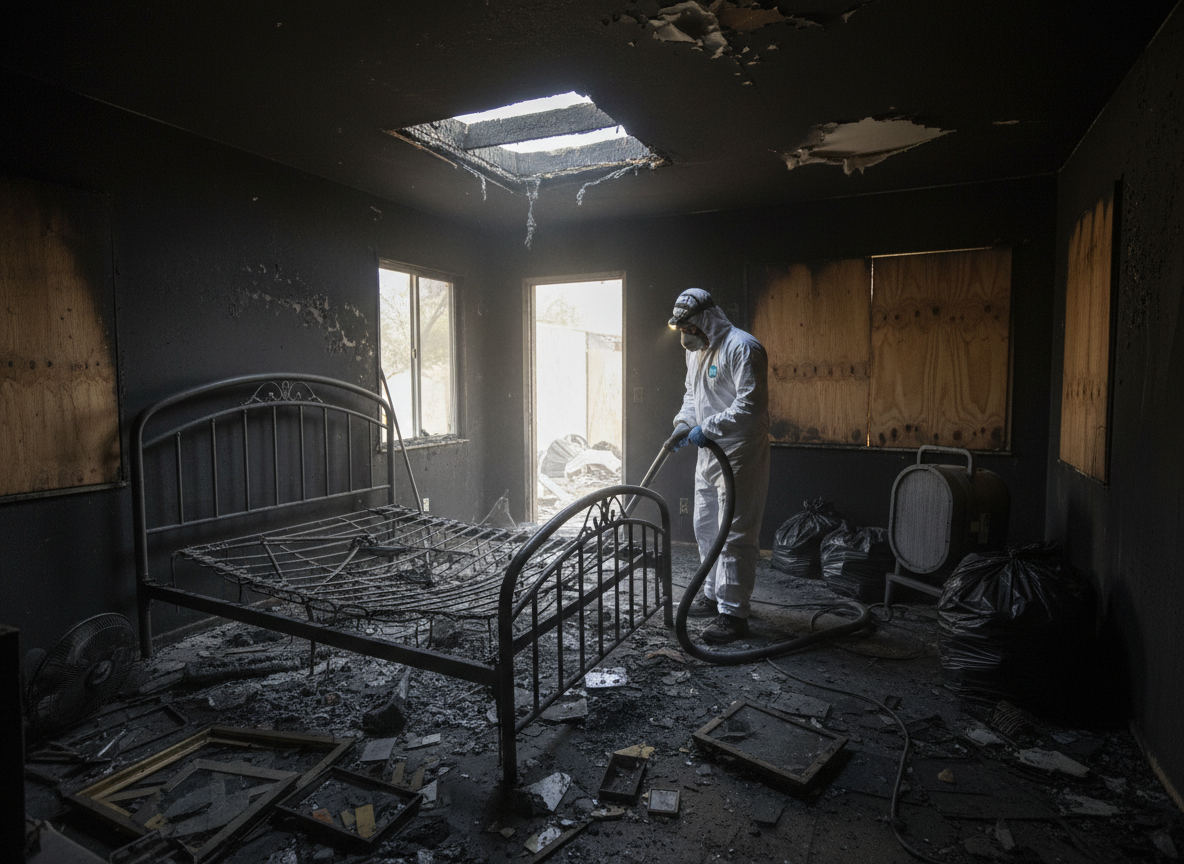
Reseda homes built after World War II often feature wood framing and plaster walls that trap smoke particles deep in cavities. Hot dry summers common in Los Angeles County speed soot migration through HVAC systems, so bedroom cleanup must include duct inspection and filter replacement to prevent recontamination in adjacent rooms. Technicians from our Victory Boulevard location start by mapping burn patterns room by room because older electrical wiring in these houses can hide secondary ignition points behind outlets.
Mediterranean climate conditions leave fine ash that settles into carpet padding and mattress foundations near Westfield Topanga and Lake Balboa. We remove and dispose of porous materials that cannot be cleaned, then apply odor-sealing primers formulated for the alkaline residue typical after structure fires. Homeowners frequently miss hidden ash in window tracks and under baseboards, which later releases odors when humidity rises during rare winter rains.
Cleanup crews contain the bedroom with plastic sheeting and negative air machines before any debris leaves the space, protecting the rest of the house from cross-contamination. We test surfaces for pH levels because acidic soot from synthetic furnishings can etch finishes on nearby hardwood floors common in Van Nuys border homes. Final clearance includes third-party air sampling to confirm particle counts meet Los Angeles County habitability standards before furniture is returned.
Technician insight
In Reseda, the thing that catches most people out with Bedroom fire damage cleanup is how the hot dry summers drive fine soot deep into the cavities of 1950s wood-framed homes near Reseda Park, so skipping the HVAC ducts means the smell returns the first time the system kicks on after we leave.
Hidden Soot In Older Plaster Walls
A bedroom fire started by a lamp cord spread through an outlet in a 1950s Reseda house. We found soot had traveled behind plaster into the adjacent hallway. Full cavity cleaning and HVAC restoration removed the odor that had lingered for weeks after the initial response.
How it works
- 1
Initial Assessment
Technicians inspect the bedroom for structural compromise, hidden char, and smoke travel paths through walls and ceilings while documenting conditions for insurance.
- 2
Containment And Safety Setup
Plastic barriers and negative air machines isolate the room, protecting hallways and neighboring bedrooms from soot migration during debris removal.
- 3
Debris Removal And Surface Cleaning
Charred materials are removed, followed by HEPA vacuuming and chemical cleaning of remaining surfaces to eliminate acidic soot residue.
- 4
Odor Neutralization And Sealing
Thermal fogging and hydroxyl generators address embedded smoke odors, then affected drywall and trim receive odor-blocking primers.
- 5
Final Clearance And Restoration
Air quality testing confirms the space meets habitability standards before new materials are installed and the bedroom is returned to use.
Pricing
Pricing depends on square footage affected, depth of soot penetration and whether HVAC cleaning is required; we provide upfront written quotes after inspection.