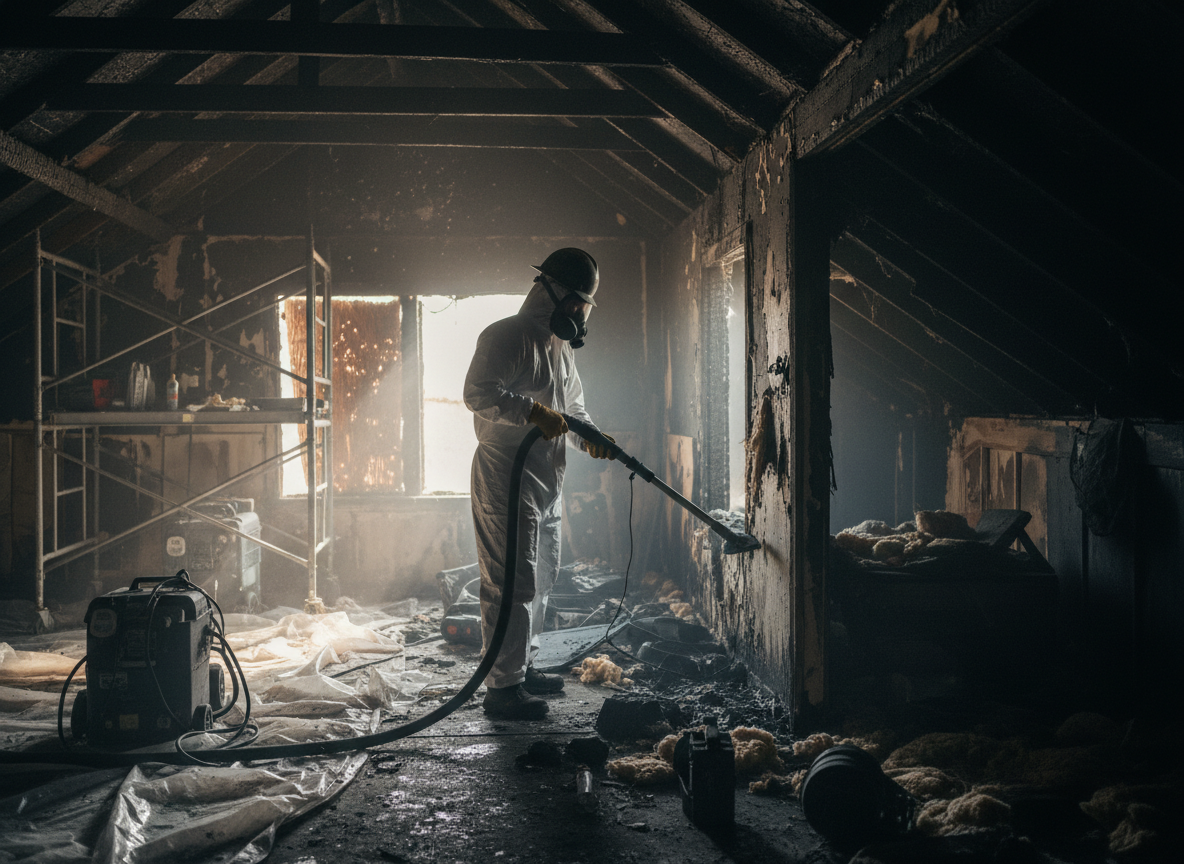
Attic fires in Reseda often start from overloaded wiring in homes built before 1970 near Reseda Park and spread fast through dry insulation during hot summers. Crews must remove charred rafters while protecting the ceiling below, then treat remaining wood with encapsulants to stop odor migration into living spaces. Los Angeles County code requires permits for structural repairs when more than 10 percent of framing is affected, and crews coordinate inspections with the local building department before reinstalling insulation.
Smoke from attic fires travels through HVAC ducts and can stain drywall in bedrooms below, especially in single-story ranch houses common around Lake Balboa. Restoration includes negative-air machines to capture soot before it settles, followed by HEPA vacuuming of every rafter bay. In Van Nuys and Woodland Hills homes with cedar shake roofs, crews check for hidden ember pockets that reignite when winds pick up again in fall.
Water used to suppress attic fires can pool in ceiling cavities and lead to mold if not extracted within 48 hours in Reseda's humidity. Technicians cut access panels, dry cavities with dehumidifiers, and test moisture levels before closing walls. Final steps include replacing blown-in cellulose with fire-retardant material rated for Los Angeles County wildfire zones.
Technician insight
In Reseda the thing that catches most people out with attic fire restoration is how quickly embers travel through the open rafter bays of 1950s homes when the Santa Ana winds kick up in late summer.
Hidden Ember Pocket in Lake Balboa Attic
A homeowner noticed a small ceiling stain after a lightning strike near Westfield Topanga. Inspection revealed an ember had traveled through a soffit vent and smoldered inside cellulose insulation for two days. Crews removed the affected section, dried the cavity, and installed new fire-rated material before the stain spread to adjacent rooms.
How it works
- 1
Initial Assessment
Technicians arrive from the Victory Boulevard base, inspect attic access, document structural damage, and test for hidden hot spots with thermal cameras.
- 2
Debris and Soot Removal
All charred insulation and debris are bagged and removed; rafters are HEPA-vacuumed and treated to neutralize smoke residue.
- 3
Drying and Odor Control
Moisture from suppression water is extracted, cavities are dried, and air scrubbers run until odor readings drop below detectable levels.
- 4
Structural Repair and Rebuild
Damaged framing is replaced per code, new fire-rated insulation is installed, and access points are sealed before final clearance.
Pricing
Cost depends on square footage affected, depth of soot penetration, and whether structural members need replacement; upfront quotes provided after inspection.