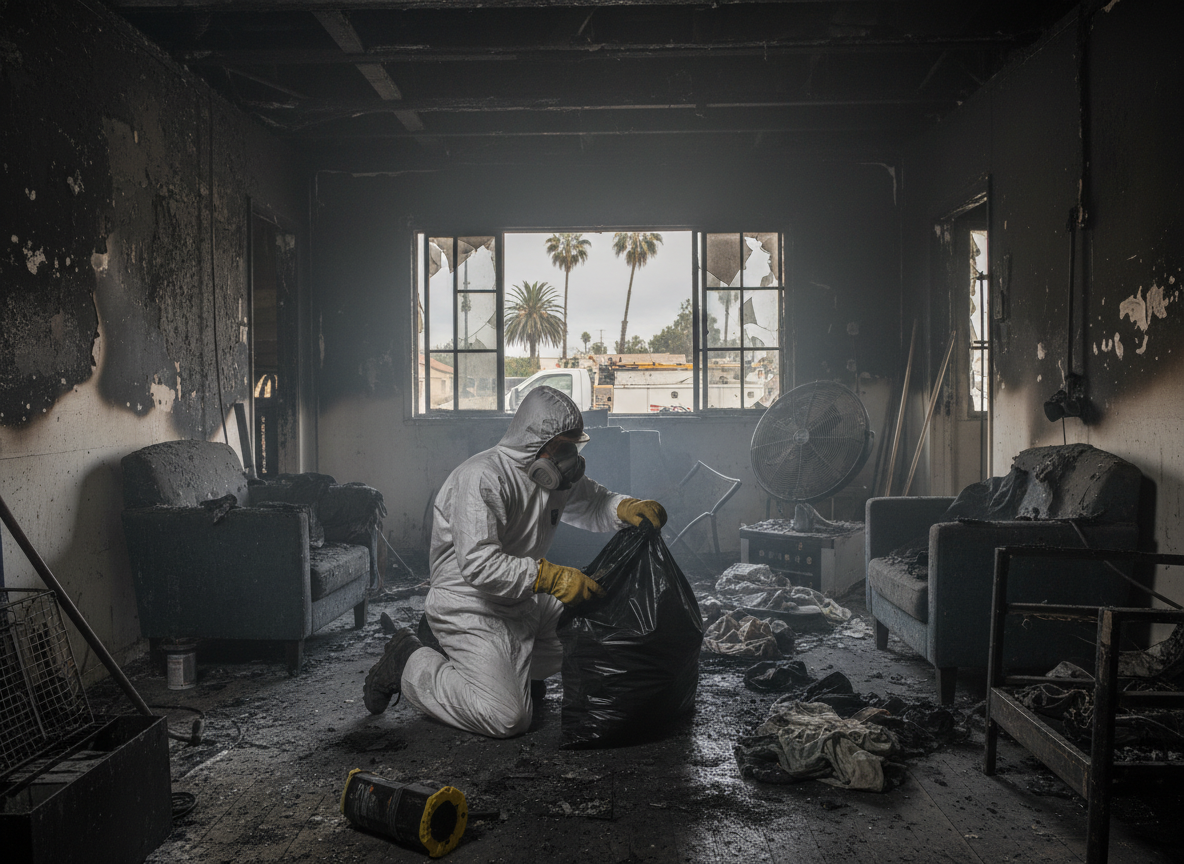
Reseda apartments built in the 1960s and 1970s around Reseda Park often feature lath-and-plaster or early drywall that traps fine soot from kitchen or electrical fires. Hot dry summers accelerate smoke movement through open windows and shared ventilation shafts, pushing residues into units two or three doors away. Technicians must map airflow paths before any cleaning begins or hidden odors will return once HVAC cycles resume.
Los Angeles County fire codes require documentation of all removed materials in multi-family buildings, especially when smoke crosses into common corridors or affects Lake Balboa units with older aluminum wiring. Porous items such as acoustic ceiling tiles and carpet padding absorb acidic smoke particles that can corrode metal fixtures if left untreated for more than forty-eight hours. Crews isolate each affected unit with negative-air machines before starting surface-by-surface cleaning to prevent cross-contamination between neighbors.
After initial removal, HEPA vacuuming and chemical neutralization are repeated on textured walls common in Reseda complexes because the Mediterranean climate keeps indoor humidity low and allows soot to re-adhere quickly. Final clearance testing includes both visual inspection and odor checks in adjacent units near Westfield Topanga, where residents frequently report lingering smells days after the original fire. Work stops only when no residue remains on white cotton test cloths wiped across high-touch surfaces.
Technician insight
In Reseda the thing that catches most people out with Apartment fire cleanup is how quickly soot travels through the shared stucco walls and single-pane windows common in 1960s buildings near Reseda Park. Hot dry summers keep the air moving, so smoke from a kitchen fire on Victory Blvd can settle inside units facing Lake Balboa before anyone notices. We always check the neighbor two doors down first.
Kitchen fire smoke spread in Reseda apartment
A cooking fire in a second-floor unit near Reseda Park sent smoke through the hallway and into two neighboring apartments. Inspection found heavy soot inside return vents and on acoustic ceilings that had not been disturbed in decades. Crews isolated the three units, removed affected drywall sections, and ran continuous air scrubbing until clearance tests passed. Residents returned within five days with no lingering odor.
How it works
- 1
Initial Assessment
Technicians walk every affected unit and adjacent apartments, noting soot levels on ceilings, inside cabinets, and within HVAC returns near Reseda Park.
- 2
Containment Setup
Plastic barriers and negative-air machines isolate the fire unit from hallways and neighboring Lake Balboa apartments to stop smoke migration.
- 3
Soot and Debris Removal
Dry and wet cleaning methods remove charred contents and surface soot from drywall, fixtures, and shared ventilation ducts.
- 4
Neutralization and Cleaning
pH-balanced solutions neutralize acidic residues on walls and floors, followed by HEPA vacuuming and air scrubbing.
- 5
Final Clearance
Visual and odor inspection across all impacted units confirms no remaining smoke or soot before residents return.
Pricing
Pricing depends on number of affected units, soot depth, and HVAC involvement; upfront quotes provided after on-site assessment.