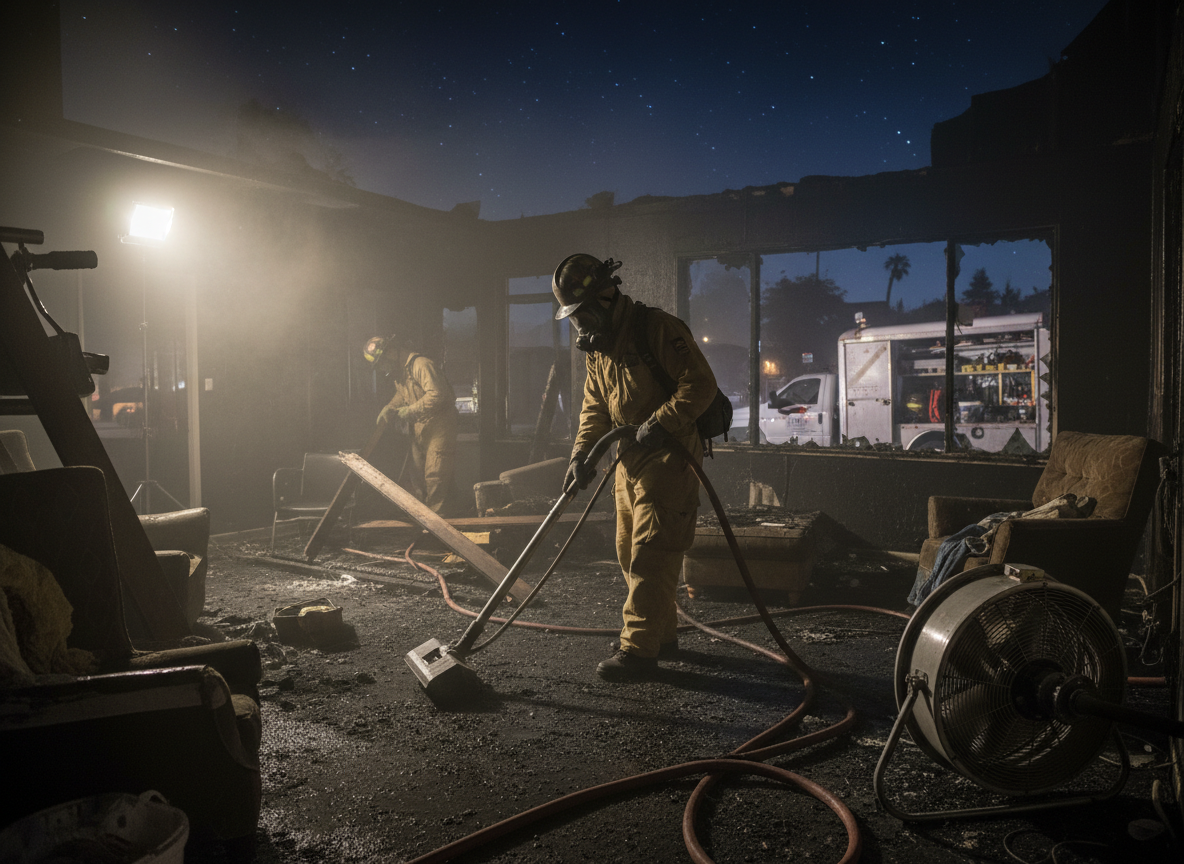
Reseda homes built mid-century often feature lath-and-plaster walls and older electrical systems that allow fire to travel quickly through concealed spaces. After a fire, crews must open ceilings and walls to remove hidden soot before it sets into porous materials during the hot, dry summer months when humidity stays low. Mediterranean climate conditions mean ash and smoke residue can remain airborne longer, requiring negative-air machines and HEPA filtration to protect adjacent rooms in dense blocks near Reseda Park.
Van Nuys and Lake Balboa properties sit close together, so wind-driven embers from a single structure fire can affect multiple roofs in one evening. Technicians start with thermal imaging to locate hot spots in attics and crawl spaces common under Westfield Topanga-area homes, then seal HVAC systems to prevent soot circulation through shared ductwork. Delaying extraction lets acidic smoke etch metal fixtures and discolor tile in kitchens built before updated Los Angeles County ventilation codes.
Immediate board-up prevents further weather intrusion during rare but intense summer heat that can warp remaining framing. Crews inventory contents room-by-room because Reseda’s older single-family stock frequently holds irreplaceable family documents stored in attics that oxidize quickly after exposure. All debris leaves the site the same day to avoid secondary contamination on neighboring driveways.
Technician insight
In Reseda, the thing that catches most people out with 24 hour fire restoration is how quickly soot bonds to the popcorn ceilings common in 1960s homes near Reseda Park once the dry summer air drops humidity below 20 percent; if you wait even one extra day the texture turns permanently gray and requires full removal instead of cleaning.
Attic Fire Spreads Through Shared Wall
A late-evening electrical fire started in an attic above a Reseda garage and traveled along shared framing into the neighboring Lake Balboa home. Crews found heavy soot coating insulation that had never been replaced since original construction. They removed the compromised material the same night, ran continuous air scrubbing for 48 hours, and returned the properties to owners without lingering odor after final clearance testing.
How it works
- 1
Emergency Dispatch
Call reaches the Reseda crew within minutes; trucks roll from the Victory Boulevard yard 24 hours a day to secure the property and begin safety assessment.
- 2
Site Evaluation
Technicians use moisture meters and thermal cameras to map fire travel through walls and attics typical in Lake Balboa homes, documenting every affected area for insurance.
- 3
Soot And Debris Removal
HEPA vacuums and air scrubbers extract loose residue before walls are opened, preventing redistribution into living spaces during dry summer conditions.
- 4
Structural Drying And Cleaning
Affected cavities receive targeted drying while salvageable surfaces undergo specialized soot removal to restore original finishes without odor return.
- 5
Final Clearance
Independent air-quality testing confirms the home meets habitability standards before owners return, with detailed reports supplied for Los Angeles County records.
Pricing
Upfront written quotes follow on-site inspection; final cost depends on square footage affected, materials involved, and extent of hidden damage discovered during demolition.